
On reminiscing
Like, why though?

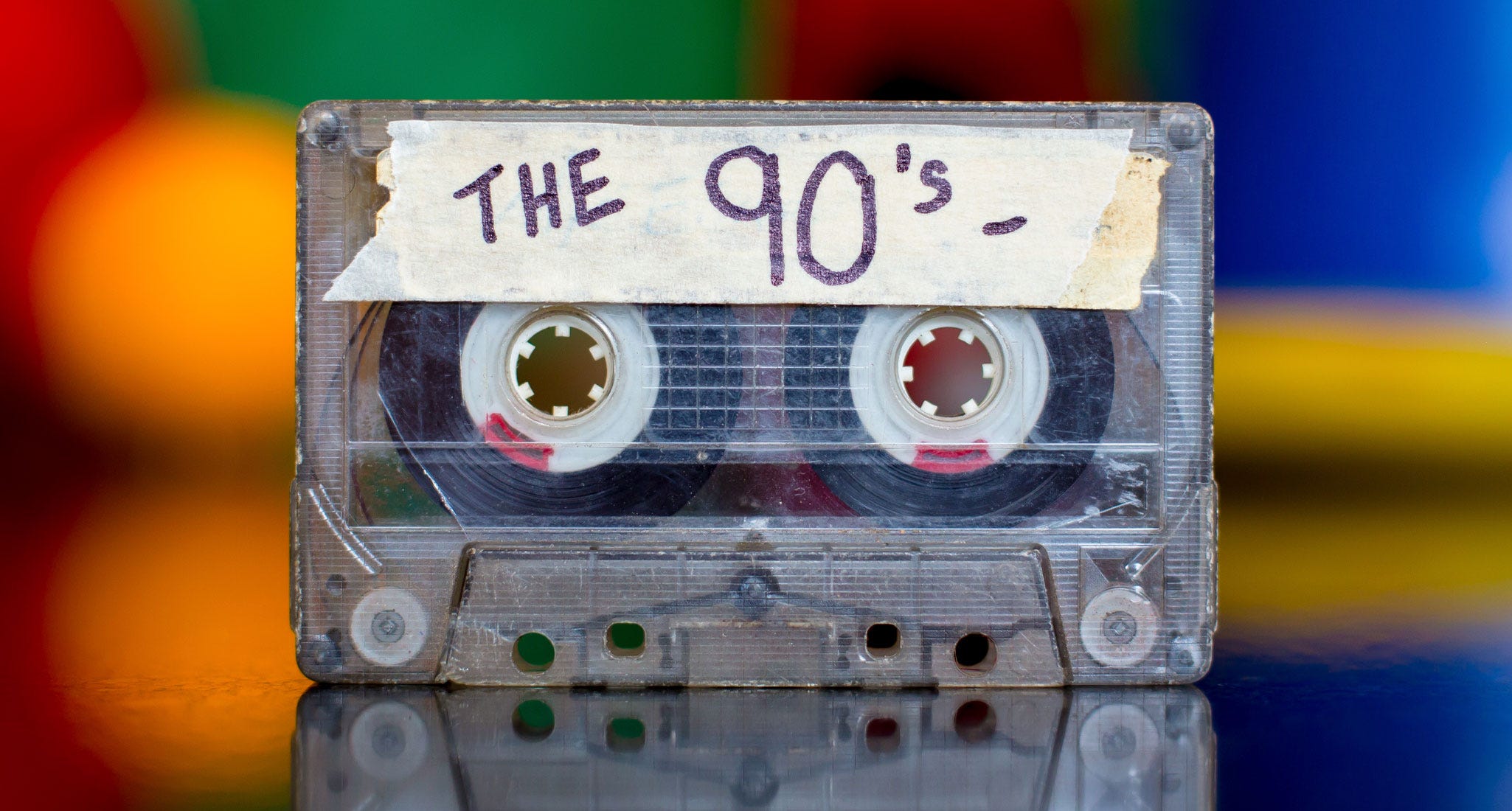
I don’t know how universal this experience is, but for me, the music I’m most nostalgic for is probably the stuff I listened to in my teens. In my case, that’s the six-year period that spanned from 1997 to 2003. Yes, you may call me uncle. With the Y2K year as a a convenient and also culturally, socially and perhaps politcally relevant midpoint, this was a special time for popular (Western) music. It was the era that saw the rise and fall of the boy band, the mainstreaming of hip hop, the peaking of alternative rock, and the birth, stagnation and eventual decline of a thousand other genres and subgenres. In Sri Lanka, too, this was a transformative period that saw the emergence of revolutionary acts like Bathiya & Santhush and Kasun & Indrachapa that changed Sinhala pop forever.
Internationally, by which I mean in the anglosphere, there’s a specific sound that most people associate with the ’90s, as they might with any given decade. This ‘sound’ is a kind of auditory cultural signature that cuts across genres, maybe even transcends genre, giving the era in question its distinct musical character. If you take the ’90s for example, the sound that captured the mood of that particular decade is so instantly recognisable that “’90s music”, as we call it, is almost a genre unto itself. People, especially older millennials and younger Gen Xers, who listened to English-language music even in little old Sri Lanka are so nostalgic for it that Yes FM throws a well-attended party celebrating it every year.
There is a similarly specific sound, though perhaps not as recognisable, that’s unique to the decade that followed, the 2000s. It was a kind of extension of the ’90s sound rather than a wholly new creation but distinct enough to still serve as a temporal-cultural marker. Back home, led by the likes of BnS who released their first album in 1998, this was true for Sri Lankan popular music too, in a way, though the boundary was less clear. Anyhow, both here and abroad, on either side of the year 2000, music was changing, from the late ’90s through to the early naughts. My teenage years saw one of these sonic timescapes, the ’90s, seamlessly blend into the other, the 2000s; and though I had no way of knowing this at the time, the music that defined this progression would leave a lasting impression.
A quarter of a century later, when my music app throws up a hit from this very specific six-year period, the trip down memory lane is quite unlike any other, an emotional experience that’s noticeably different from the feelings of nostalgia that other older things might evoke. It… hits different, as the kids say. I don’t know if it is because the change in the music I was listening to happened to coincide with my own personal transformation from childhood to young adulthood; I guess that’s as good an explanation as any. But there is a clear difference between the way the songs from this particular point in time make me feel now in my early 40s and the effect that relatively more recent, though still old, or even much older music has on me.
Perhaps this distinction is more pronounced with music than with other forms of art because music offers a more obvious, easier to read record of cultural evolution. In my case, if you permit me a little self-indulgence, this evolution ran parallel to changes happening within me, providing an all too contemporary ‘soundtrack’ to my adolescence, forever trapping my teens in a musical time capsule. So maybe it was inevitable that this stuff was going to stay with me. It’s certainly not unique to me, but I can only go by my own experience; and my experience tells me that there is something about the memories from our youth that is profoundly, incomparably more impactful than anything else. If you extrapolate from music, at a deeper, more general level, it seems that those confusing few years never really leave us; it seems that our teenage experiences imprint in us, for better or worse, some things that we cannot ever shake off.
Which brings me to the place I really wanted to go to with this whole shebang. Do we ever really grow up? Or are we all just playing at being adults? Why else would nostalgia invariably be tinged with a bizarre, all consuming bitter-sweetness that beckons us back into the past? Why else, whenever a song we listened to growing up comes on the radio, do we yearn for a return to the old, knowing full well how ludicrously romanticised that ‘old’ is? Why else do we crave, to quote a ’90s anthem, a return to innocence, an innocence that in all likelihood never was?
I don’t know. I’m not sure I even want to know. I’m off to listen to some Moby.